





AI-Powered, HIPAA-Compliant Remote Health & Wellness Screening for Virtual Care
Behavioral telehealth and counseling continue to expand across healthcare, wellness, and enterprise environments. While virtual care increases access and convenience, it limits clinicians’ ability to observe subtle physiological and neurological cues traditionally captured during in-person encounters. FacialDx addresses this gap by introducing a non-invasive, AI-driven wellness screening layer that integrates seamlessly into telehealth workflows.
FacialDx is not a diagnostic device. It functions as a clinical decision-support and wellness screening technology designed to support earlier prioritization, referrals, and care coordination across virtual care settings.
The Telehealth Screening Problem
Most telehealth platforms function primarily as communication tools. While effective for real-time interaction, they are not designed to systematically analyze non-verbal physiological signals that may provide additional context during behavioral health, counseling, or neurological encounters.
In virtual settings, providers may have limited visibility into early indicators associated with psychological stress, neurological strain, fatigue, or cognitive changes. As telehealth volume increases, these limitations become more pronounced, particularly for organizations delivering care at scale.
Why This Problem Matters in Behavioral Telehealth
Telehealth and virtual counseling now serve individuals across a wide spectrum of use cases, including routine wellness check-ins, therapy, coaching, neurological consults, post-injury follow-up, and ongoing mental health support. As these services scale, providers face increasing difficulty identifying subtle changes early through conversation and observation alone.
Across telehealth populations:
- Psychological, neurological, and stress-related indicators may be under-reported or overlooked in virtual encounters
- Many conditions develop gradually, making early identification challenging without objective context
Traditional assessment pathways often require multiple visits or extended observation - Providers lack a standardized, objective screening layer to support consistency across large populations
- High visit volume increases clinician cognitive load and operational strain
Without a scalable pre-visit wellness screening mechanism, telehealth organizations are forced to rely primarily on subjective inputs and reactive workflows. A universal, non-invasive screening layer benefits anyone engaging in telehealth or counseling by supporting earlier, more informed care decisions.
Limitations of Current Telehealth Screening Solutions
Most telehealth programs rely on self-report questionnaires, limited 2D video observation, and reactive care models. While these tools provide value, they do not offer objective physiological context or high-frequency screening capability.
Common limitations include:
- No automated early signal detection
- No objective biometric indicators
- No scalable triage layer for large populations
- Dependence on delayed referrals or external testing
- Limited ability to support proactive, preventive care
Despite rapid growth in digital health, telehealth screening remains largely manual and inconsistent across providers and platforms.
The FacialDx AI-Powered Solution for Behavioral Telehealth Wellness Analysis
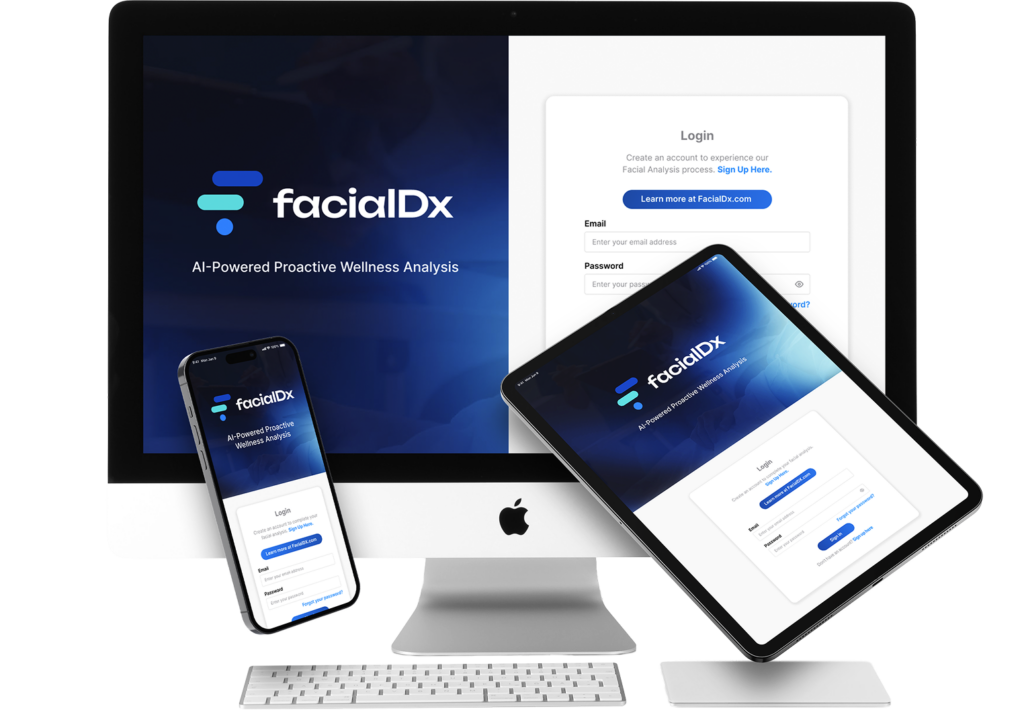
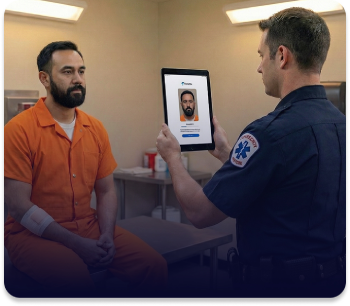
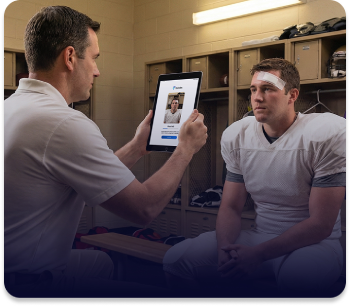
FacialDx is a non-invasive AI screening platform designed to support preactive health and wellness analysis for individuals and enterprise telehealth organizations.
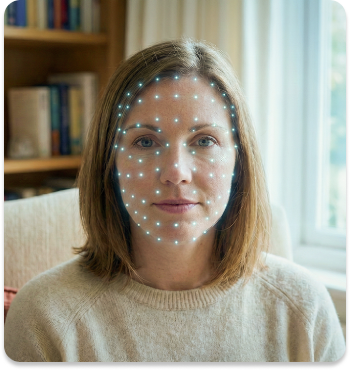
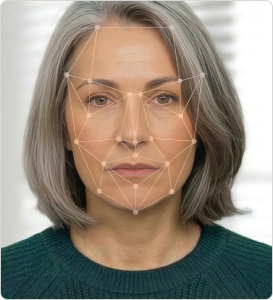
Using proprietary machine learning models, FacialDx analyzes facial variables correlated with health and wellness indicators by processing over 13,824 algorithmic data points and configurations. These patterns may be associated with psychological stress, neurological strain, fatigue, cognitive impairment, and physiological changes.
The platform identifies facial signatures correlated with:
Psychological stress and mood-related indicators
Traumatic and acquired neurological strain
Chronic stress and fatigue patterns
Cognitive load and impairment signals
Hormonal and cardiovascular-related indicators
Cancer-related facial pattern shifts (non-diagnostic)
FacialDx supports rapid, scalable screening without requiring specialized equipment or disrupting existing telehealth workflows.
How FacialDx AI Works in Telehealth Environments
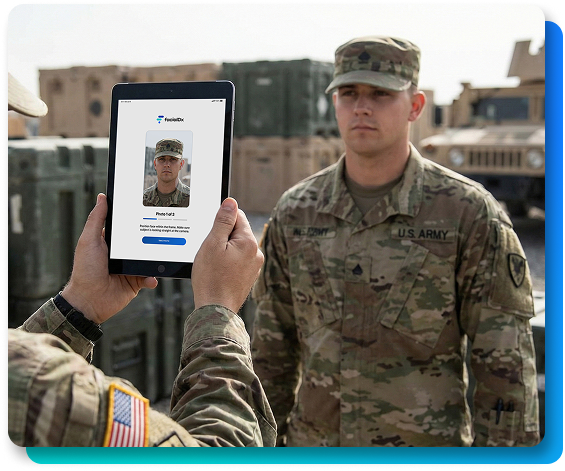
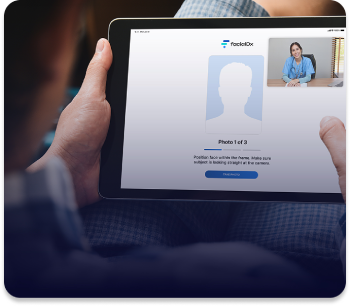
FacialDx integrates into telehealth sessions using standard webcams, desktops, or mobile devices.
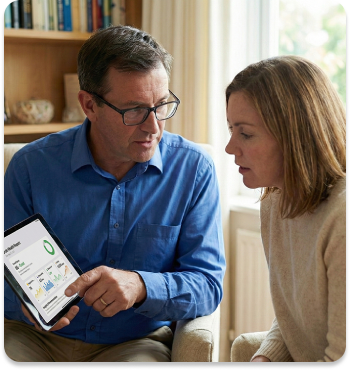
The system captures high-resolution facial data in seconds, analyzes physiological facial features and micro-variations, and interprets AI-derived wellness indicators. Secure screening insights are generated in near real time and made available to support clinician prioritization and care coordination.
This creates a pre-diagnostic screening layer that complements clinical judgment, formal assessments, and diagnostic testing rather than replacing them.
Benefits of FacialDx AI Analysis for Behavioral Telehealth and Counseling Providers
Immediate identification of potential psychological, neurological, or physiological risk indicators during virtual sessions
Significant reduction in time from screening to care action compared to traditional workflows
No additional hardware or patient burden
Support for earlier referrals and proactive care pathways
Population-level screening across large telehealth networks
Reduced clinician cognitive load and visit length
Improved consistency, engagement, and care outcomes
Reduced reliance on costly imaging and prolonged evaluation processes
For large telehealth organizations, early screening enables meaningful cost avoidance through preventive intervention and improved care coordination.
Clinical and Enterprise Validation of FacialDx AI Wellness Technology
FacialDx is built on decades of clinical research and tens of thousands of patient evaluations in facial diagnostic medicine. The platform’s AI models align with peer-reviewed research demonstrating strong correlation between facial markers and health-related indicators.
FacialDx is designed for enterprise deployment with healthcare-grade security, regulatory awareness, and scalable infrastructure to support large, distributed care networks.
What Makes FacialDx Different
Purpose-built healthcare facial analysis AI
Patent-pending screening methodology
Simultaneous analysis of psychological and physiological indicators
Compatibility with consumer-grade telehealth devices
HIPAA and GDPR compliant architecture
U.S.-based infrastructure and data governance
Objective screening insights previously unavailable in telehealth
Proactive, predictive screening model
API-ready integration with major telehealth platforms
Clear positioning as healthcare technology, not surveillance or emotion recognition
Enterprise Deployment and Pricing Models
FacialDx offers flexible enterprise pricing structures, including per-member-per-month models, per-visit API usage, enterprise SaaS licensing, white-label integrations, and high-volume image processing tiers for large networks.
Next Steps for Telehealth and Counseling Organizations - Experience FacialDx AI for Telehealth
- Schedule a live demonstration with your clinical and technology leadership teams
- Review integration and deployment options for your telehealth platform
Receive a customized rollout plan for population-level screening - Launch a pilot program across wellness, counseling, or high-volume care cohorts
- FacialDx enables telehealth providers to move beyond reactive virtual visits and toward proactive, data-informed care—without changing how clinicians practice.
Frequently Asked Questions (FAQ's) Behavioral Telehealth and Counseling Decisionmakers
1. What is FacialDx and how does it support telehealth screening?
FacialDx is a non-invasive AI wellness screening platform designed to support telehealth and counseling workflows. It analyzes facial variables correlated with health and wellness indicators to provide objective screening insights that help clinicians prioritize care and coordinate next steps.
2. Is FacialDx a diagnostic tool for mental health or neurological conditions?
No. FacialDx is not a diagnostic device and does not provide medical diagnoses. It functions as a clinical decision-support and wellness screening technology intended to complement clinician judgment, formal assessments, and diagnostic testing.
3. How does AI facial analysis work in telehealth environments?
FacialDx uses proprietary machine learning models to analyze facial features captured through standard telehealth cameras. These models process thousands of facial data points to identify patterns correlated with wellness and risk indicators in near real time.
4. Is FacialDx HIPAA compliant for telehealth providers?
Yes. FacialDx is designed with HIPAA- and GDPR-compliant architecture, secure data handling, and enterprise-grade controls to support healthcare organizations, clinicians, and telehealth platforms operating in regulated environments.
5. What types of telehealth organizations use FacialDx?
FacialDx is used by enterprises that deliver virtual care through clinicians, therapists, counselors, behavioral health providers, neurologists, and integrated care teams across wellness, counseling, and remote healthcare services.
6. Can FacialDx be used for mental health screening during virtual visits?
FacialDx supports non-invasive wellness screening that may identify indicators correlated with psychological stress, mood-related patterns, and cognitive load. It is designed to provide additional context during virtual visits, not to replace clinical mental health assessments.
7. Does FacialDx require special hardware or devices?
No. FacialDx works with standard webcams, laptops, desktops, and mobile devices commonly used in telehealth sessions. No specialized equipment or imaging hardware is required.
8. How quickly does FacialDx provide screening insights?
FacialDx captures and analyzes facial data in seconds, producing secure screening insights in near real time to support care prioritization during or prior to telehealth sessions.
9. Can FacialDx scale across large telehealth networks?
Yes. FacialDx is built for enterprise-scale deployment and supports population-level screening across high-volume telehealth organizations, including networks with hundreds of thousands or millions of virtual visits annually.
10. How does FacialDx reduce clinician burden in telehealth?
By providing objective screening context, FacialDx helps reduce cognitive load, streamline prioritization, and support more focused virtual encounters—allowing clinicians to spend less time on initial screening and more time on care delivery.
11. Is FacialDx suitable for wellness and preventive telehealth programs?
Yes. FacialDx is designed for proactive and preventive use cases, including routine wellness assessments, counseling, coaching, and ongoing telehealth monitoring across diverse populations.
12. How does FacialDx integrate with existing telehealth platforms?
FacialDx is API-ready and designed to integrate with major telehealth systems, digital health platforms, and enterprise healthcare workflows without disrupting existing operations.
13. What makes FacialDx different from emotion recognition software?
FacialDx is purpose-built healthcare technology focused on wellness screening and physiological pattern analysis. It is not consumer emotion recognition software and is positioned exclusively for clinical and enterprise health use cases.
14. Can FacialDx support population health screening initiatives?
Yes. FacialDx enables high-frequency, scalable wellness screening that supports population health programs, risk stratification efforts, and proactive care models across large telehealth organizations.
15. How can a telehealth enterprise get started with FacialDx?
Organizations can contact the FacialDx team to request more information, review integration options, schedule a live demonstration, or launch a pilot program tailored to their telehealth or counseling environment.