









The AI Revolution in Healthcare — and How FacialDx is Leading the Charge

Artificial Intelligence is no longer science fiction in medicine. As documented in “Revolutionizing healthcare: the role of artificial intelligence in clinical practice”, AI is increasingly transforming how we diagnose disease, recommend treatment, educate patients, and manage population health, among many other tasks. BioMed Central

As powerful as these possibilities are, realizing them in safe, ethical, and practical ways is not trivial. That’s where real‐world companies like FacialDxcome in. Their work offers a concrete example of several of the ideas and challenges discussed in the BMC review. Below, I’ll map the review’s findings onto what FacialDx is doing, pointing out opportunities, hurdles, and what might lie ahead.

What the BMC Review Tells Us

Here are the key takeaways from the BMC article:

  1. Improved Diagnostic Accuracy and Efficiency
    AI tools (including ML, deep learning, convolutional nets, etc.) have shown promise at diagnosing disease (skin cancer, diabetic retinopathy, etc.), sometimes outperforming human experts in certain tasks. BioMed Central+1
  2. Personalized Treatment and Clinical Decision Support
    AI can help tailor treatments, optimize dosing, predict treatment responses, etc. BioMed Central+1
  3. Population Health, Predictive Analytics, and Workflow Optimization
    Predicting risk, optimizing triage, managing large-scale public health challenges; also establishing guidelines, automating tasks, etc. BioMed Central
  4. Patient Engagement, Education, and Remote Monitoring
    Tools like virtual assistants, chatbots, and AI-driven education can play a role. BioMed Central
  5. Challenges: Data Privacy, Bias, Regulation, Trust, Human Oversight
    The more AI is used, especially in sensitive areas like mental health, the more crucial it is to ensure data is representative, ensure patient privacy, manage bias, ensure algorithms are validated, maintain human oversight, and building trust. BioMed Central

Try the app free today!

What is FacialDx Doing?

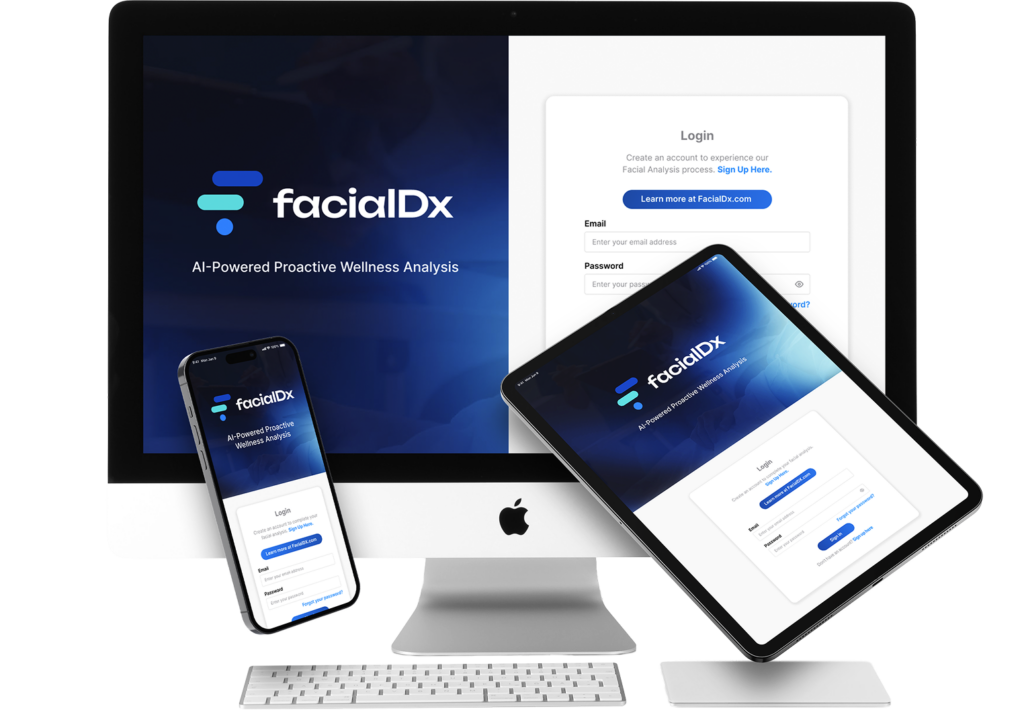
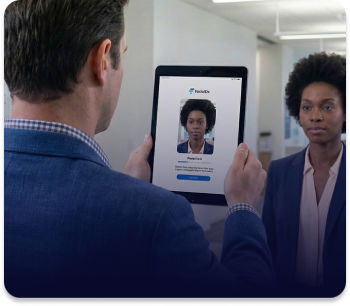
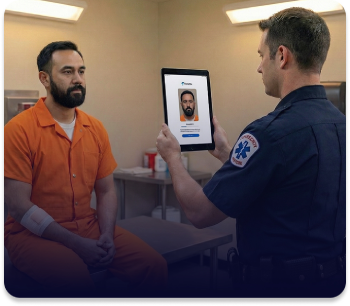
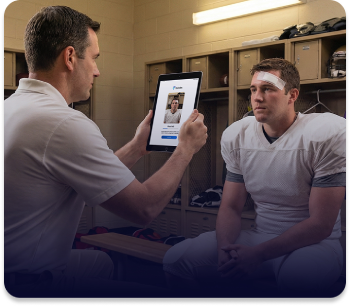
FacialDx is an AI/digital health firm that is developing software to automate or assist in detecting health conditions from facial features. Key points include:

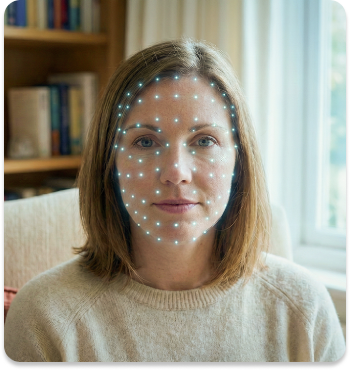
  • Their NIMS (Non-invasive Mental Screening) technology screens for depressive symptoms by analyzing high-definition facial images taken by mobile or desktop devices. Nasdaq
  • The software is being moved into clinical trials (via Synbio International) to validate its accuracy, reliability, and scalability. Nasdaq
  • The goal is to provide an objective tool that supplements traditional mental health screening (which often depends on self-reporting, clinician interviews, etc.). Nasdaq+1

So, FacialDx is working at the intersection of AI diagnostics, patient screening/monitoring, and mental health — three areas the BMC review identified both as highly promising and challenging.

How FacialDx Illustrates the Promises from the Review

Here are ways FacialDx aligns with or advances the opportunities described in the BMC article:

  1. Diagnostic Support
    By detecting signs of depression via facial cues, FacialDx aims to improve early detection, which could reduce false negatives, shorten the time before intervention, and help in settings with limited mental health professionals.
  2. Remote Monitoring & Accessibility
    Because the input is images captured via common devices (phones, desktops), this technology could reach people who can’t easily get to a clinic.
  3. Efficiency and Cost Savings
    If the technology works as hoped, screening could be done more automatically and cheaply than in-person assessments, freeing up clinician time.
  4. Population Health and Workplace / Corporate Use
    Mental health burden is large, and having scalable screening for depression across populations (employees, remote communities, etc.) could allow earlier interventions, better resource allocation, etc.
  5. Towards Personalized Care
    Although FacialDx’s initial aim is screening rather than full treatment prescriptive tools, the data could inform personalized follow-ups: who needs more intensive therapy, who might require different kinds of care, etc.

Why FacialDx Might Be a Model for the Future

Despite challenges, FacialDx offers a valuable case study demonstrating how AI in healthcare might mature:

  • Starting small with screening and validation before broad deployment is wise.
  • Tackling mental health screening, an area often neglected or under-resourced, is especially high impact.
  • Our non-invasive model is appealing: fewer barriers to adoption.
  • Potential multi-pronged use: clinical, corporate wellness, remote or underserved populations.

How this All Ties Back to the BMC Review — A Vision

Putting the BMC review and FacialDx’s work together, here’s a hopeful vision:

  • Medical training and education includes AI literacy: clinicians get comfortable with using tools like FacialDx’s NIMS. They know when and how to trust AI, understand its outputs, understand when to override.
  • Regulatory frameworks evolve to accommodate AI tools, especially in mental health, balancing innovation with safety.
  • Ethical standards evolve: standardized ways of sourcing, consenting, handling biometric data; auditing algorithms for fairness; transparency in how tools make decisions.
  • AI becomes part of integrated workflows, not overlayed. For example, a primary care physician or mental health clinician uses NIMS as a screening input, but does the full assessment themselves. The tool identifies who might need them more.
  • Patient engagement and trust: patients are informed about how the tool works, what the data will be used for, how privacy is guaranteed.

Conclusion: Where We Go From Here

The BMC article clearly documents both the tremendous potential of AI in healthcare and the caveats that must be addressed. FacialDx is one of the companies pushing forward, particularly in the mental health space, to turn potential into practice.

Our technology could become a powerful tool in the clinician’s toolbox. It could help earlier detection of depression, improve access to mental health screening, and alleviate some burdens both for patients and providers.

On the flip side, ongoing vigilance will be required: continuous validation, transparency, bias mitigation, and maintaining the essential human dimension in healthcare.

Try the app free today!

Get Started

Ready to transform your health screening? Contact our team today.

Main Contact Form

This field is for validation purposes and should be left unchanged.

“FacialDx has revolutionized how we approach early health screening. The accuracy and speed of their AI-powered analysis has enabled us to identify conditions earlier than ever before.”

DR

Dr. Rebecca Martinez

Chief Medical Officer, Veterans Health

Want to See if FacialDx is a Fit for Your Enterprise?