
Correctional facilities are increasingly challenged by rising inmate mental distress, overcrowding, staffing shortages, and escalating safety concerns. Identifying individuals who may be experiencing elevated distress early is critical — not only for inmate well-being, but for officer safety, institutional stability, and cost control.
Traditional approaches to identifying inmate distress rely heavily on self-reporting, periodic evaluations, or referrals after an incident has already occurred. These methods are resource-intensive, inconsistent, and often reactive. As a result, warning signs are frequently missed until they escalate into crises that require emergency intervention, use-of-force responses, or hospitalization.
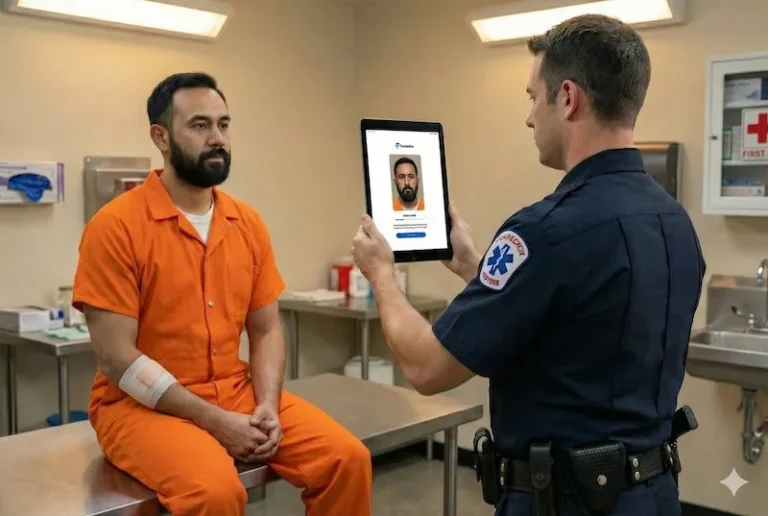
FacialDx offers correctional leaders a non-contact, scalable way to surface early wellness indicators associated with distress — without relying on medical exams, diagnoses, or invasive assessments. This makes it especially well-suited for high-volume, resource-constrained correctional environments.
Why Early Distress Detection Matters in Correctional Facilities
Multiple studies have shown that incarcerated populations experience significantly higher rates of stress, trauma exposure, anxiety, and emotional instability compared to the general population. Factors such as intake shock, separation from family, substance withdrawal, prior trauma, and environmental stressors can intensify distress quickly after incarceration.
When distress goes undetected, facilities face increased risk of:
- Self-harm or suicide attempts
- Inmate-on-inmate violence
- Escalation during routine interactions
- Increased demand on crisis response teams
- Higher medical and transport costs
From an operational standpoint, unmanaged distress creates unpredictable environments that place officers at greater risk. This is why fatigue detection in correctional settings among staff and early distress awareness among inmates must be viewed as interconnected components of institutional safety.
The Limits of Medical and Self-Reported Screening Models
While clinical evaluations are essential when appropriate, they are not feasible as a first-line screening tool for every inmate on a continuous basis. Medical assessments require licensed staff, time, privacy, and funding — resources that many facilities simply do not have at scale.
Self-reporting is also unreliable. Inmates may underreport distress due to fear, mistrust, stigma, or concern about housing changes. As a result, facilities often lack objective early signals that would allow staff to intervene before situations escalate.
Correctional leaders need cost-effective, non-medical screening tools that support early awareness without overburdening healthcare teams.
How FacialDx Identifies Early Distress Indicators Without Medical Exams
FacialDx uses AI-based facial analysis to generate wellness indicators associated with stress load and physiological strain. The system does not diagnose mental health conditions or replace clinical judgment. Instead, it provides observational insights that help facilities recognize patterns of elevated distress risk.
Because FacialDx is non-contact and fast, it can be deployed:
- During intake or housing transitions
- As part of routine check-ins
- Following stressful events or disruptions
- In conjunction with existing mental health workflows
This approach allows facilities to identify individuals who may benefit from closer observation or support — without labeling, diagnosing, or stigmatizing inmates.
Facilities can also pair this capability with non-contact intake screening for new arrivals, improving early awareness during one of the highest-risk periods of incarceration.
Improving Safety Through Group-Level Distress Awareness
Distress rarely exists in isolation. When multiple individuals within a housing unit show elevated stress indicators, the risk of conflict, agitation, or collective disruption increases.
This is where FacialDx contributes to group-level wellness indicators to reduce violence. Aggregate, anonymized data allows administrators to identify:
- Housing units experiencing elevated stress trends
- Time periods associated with increased agitation
- Areas where staffing or program adjustments may be needed
These insights support proactive management strategies rather than reactive enforcement — reducing strain on officers and lowering the likelihood of incidents.
Supporting Mental Health and De-Escalation Teams with Objective Insights
Mental health staff and de-escalation teams are often stretched thin. FacialDx helps prioritize resources by highlighting where attention may be needed most.
By providing objective wellness signals, facilities can better support:
- Mental health staff using automated check-ins
- De-escalation teams responding to early warning signs
- Custody staff making informed interaction decisions
This data-driven approach complements — rather than replaces — professional judgment and aligns with best practices for trauma-informed corrections.
Operational and Financial Benefits of Early Distress Detection
From a financial perspective, early distress awareness produces measurable savings. Crisis events are expensive. They often require additional staffing, emergency medical response, transport, paperwork, investigations, and sometimes litigation.
By identifying elevated distress earlier, facilities can:
- Reduce crisis-response frequency
- Lower medical and transport expenses
- Decrease use-of-force incidents
- Improve staff efficiency and morale
These savings compound over time. Even a modest reduction in crisis events can offset the cost of implementing FacialDx across a facility.
Facilities interested in broader strategic use can also connect distress monitoring with facility-wide wellness monitoring system initiatives that guide staffing, programming, and policy decisions.
Distress Detection as a Component of Predictive Safety Strategy
Early inmate distress indicators are a critical input for predictive tools for preventing correctional incidents. When combined with officer readiness data, post-incident screening, and trend analysis, leadership gains a clearer picture of institutional risk.
This enables better planning, smarter resource allocation, and safer environments — without adding administrative burden.
A Smarter, Scalable Approach to Inmate Wellness Awareness
Correctional leaders are tasked with balancing safety, budgets, compliance, and humane treatment. FacialDx provides a practical tool that aligns with all four priorities.
By offering non-invasive, non-medical wellness indicators, FacialDx helps facilities move from reactive crisis management to proactive risk awareness — improving outcomes for inmates, officers, and the institution as a whole.
Try FacialDx free today and see how early, contactless wellness screening can support safer, more efficient correctional operations.
