
Advancing Wellness Screening and Readiness Monitoring for Military and First Responders
For teams responsible for national defense, community safety, and emergency response, having early insights into the wellness of their personnel isn’t just helpful—it’s essential to operational readiness. FacialDx provides teams with a cost-effective, fast and reliable solution to help proactively address wellness and operational readiness.
Across every branch of the military and throughout the community of law enforcement officers, firefighters, EMTs, and emergency response teams, the demands placed on personnel continue to intensify. These roles carry high physical and psychological burdens that accumulate over time—often silently. Service members and first responders face everything from unpredictable trauma exposure to long shifts, disrupted sleep cycles, blast events, environmental extremes, and moments of life-or-death pressure. The weight of these experiences is not always visible, and early-stage signs of strain can be nearly impossible to detect through traditional methods.
Despite the seriousness of these challenges, most organizations still rely on sporadic wellness checks, self-reporting, and clinical assessments that occur long after early indicators appear. Personnel may struggle with fatigue, reduced clarity, emotional strain, delayed reaction times, or diminished resilience. Yet cultural norms in these professions often encourage individuals to “push through,” meaning symptoms may go unmentioned until they become far more serious. This gap in early awareness contributes to preventable performance decline, elevated risk, and increased long-term cost—both human and financial.
FacialDx was created to help close that gap. It offers a modern, non-invasive way for organizations to understand wellness-related indicators and support their people proactively. For teams responsible for national defense, community safety, and emergency response, having early insights into the wellness of their personnel isn’t just helpful—it’s essential to operational readiness.
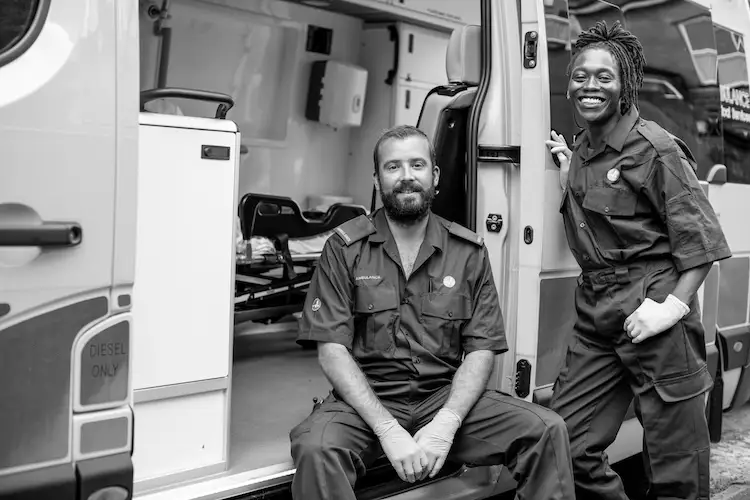
The Growing Wellness Challenge in High-Intensity Professions
Military and first responder communities face levels of occupational stress uncommon in most other fields. Over time, repeated exposure to traumatic scenes, concussive forces, physical exhaustion, and emotionally charged incidents can influence a person’s overall wellness. Research over the last decade has shown that even mild blast exposures, sleep disruption, or recurring trauma events can create gradual changes in cognitive, emotional, and physiological functioning.
The challenge is that these shifts often start small. Early fatigue, subtle changes in decision speed, irritability, or reduced focus might be dismissed as lack of sleep or just a tough week. Supervisors may not notice these early patterns, and personnel may be reluctant to bring them up. The result is a widening gap between when early changes begin and when an organization becomes aware of them.
This gap is costly. Thousands of service members each year face wellness challenges that could have benefited from early support. First responder departments continue to struggle with burnout, absences, impaired on-duty performance, and retention challenges. Many of these issues are not the result of dramatic incidents, but rather slow-building shifts that accumulate over months or years.
Current wellness monitoring systems—annual screenings, occasional questionnaires, or post-incident evaluations—are not designed for continuous early awareness. Organizations need a tool that is fast, accessible, objective, and deployable at scale across entire units or departments.
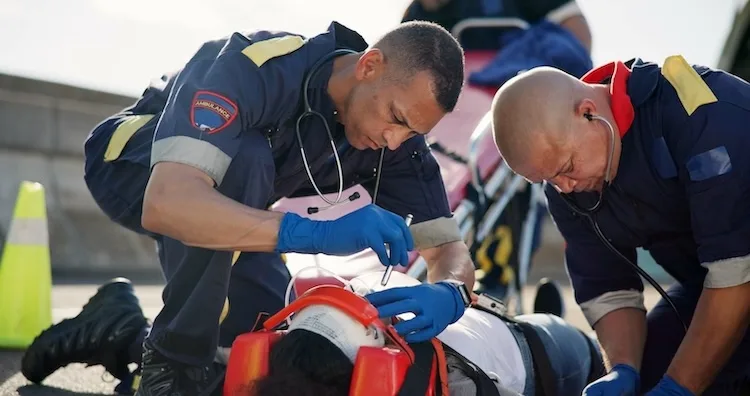
The Urgent and Preventable Suicide Crisis in Uniformed Service Communities
America’s military personnel and first responders face dangers that extend far beyond the line of duty. One of the most devastating and preventable outcomes is the alarming rate of suicide within these communities. The data reveals a public-health crisis that demands far more proactive wellness monitoring and earlier detection
Military Suicide Rates: A Persistent and Deeply Alarming Crisis
The U.S. Department of Veterans Affairs’ 2024 Annual Report shows 6,407 veteran suicides in 2022, a number that remains among the highest of any U.S. population group.
Source: VA Annual Report (2024) — mentalhealth.va.gov
-
Unadjusted veteran suicide rate: 34.7 per 100,000
-
General U.S. adult rate: 17.1 per 100,000
Veterans die by suicide at more than double the rate of non-veteran adults.
Source: VA Annual Report (2024)
Military suicide is not a recent trend — it has been climbing for nearly two decades. Multiple studies have demonstrated that repeated deployments, traumatic exposure, high operational tempo, transition stress after separation, and chronic fatigue all contribute to emotional strain.
Additional Military Data Points
-
Suicide has exceeded combat deaths in several years during and after the post-9/11 conflicts (multiple DoD analyses).
-
Active-duty suicide rates have remained consistently elevated, with some branches reporting their highest numbers in modern record-keeping across the last 5 years.
-
Among veterans aged 18–34, suicide rates have shown some of the fastest increases, reflecting challenges faced during post-service reintegration.
Across all military populations—active-duty, reserve, and veteran—the consistent pattern is the same: early warning signs often go undetected or underreported until risk escalates.
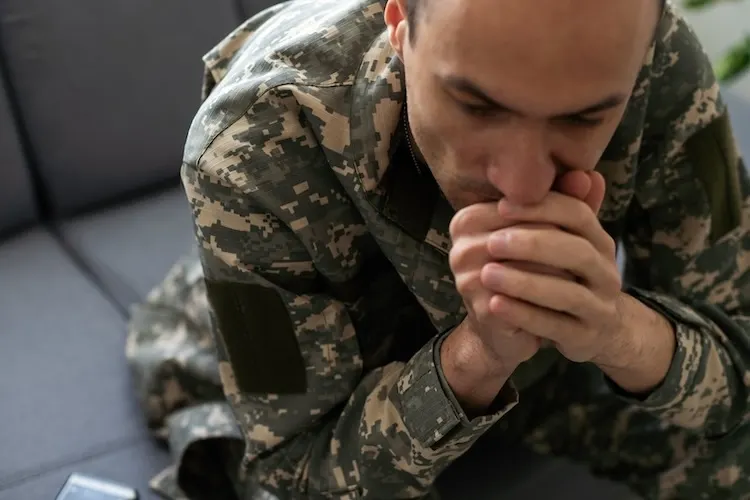
First Responder Suicide Rates: A Hidden Epidemic Within Public Safety
First responders experience trauma exposure, shift disruptions, sleep deprivation, and psychological strain at levels far above the general workforce. The consequences are severe.
A national analysis of suicide deaths from 2015–2017 found first responders accounted for 1% of all U.S. suicides, broken down as:
Source: PMC study on first-responder suicide
-
Law Enforcement: 58%
-
Firefighters: 21%
-
EMS Clinicians: 18%
-
Telecommunicators: ~2%
The same study found 69% of first-responder suicides involved a firearm — compared to 44% among non–first responders.
State-Level Research Adds Further Urgency
A Massachusetts review (2018–2022) found:
Source: mass.gov analysis
-
First responder suicide rate: 17.4 per 100,000
-
General population rate (ages 18–64): ~11.6 per 100,000
This means first responders in that state were 1.5 times more likely to die by suicide than comparable adults.
Many deaths occurred off duty, illustrating that risk is not limited to emergency situations — it follows responders home and into daily life.
Drivers of First Responder Suicide Risk
-
Chronic exposure to trauma and critical incidents
-
Emotional suppression and stigma surrounding help-seeking
-
Organizational stress and administrative pressure
-
Overwork, under-rest, and accumulated fatigue
-
Repeated exposure to violence, death, and unpredictable risk
While mental-health resources exist, many responders hesitate to self-report issues out of fear of professional consequences, stigma, or temporary removal from duty.
Why Proactive Wellness Monitoring Matters for Both Military Personnel and First Responders
Across both military and first-responder populations, one truth is consistent:
Suicide risk doesn’t appear suddenly — it builds over time.
Many individuals display gradual shifts in:
-
Affect
-
Stress response
-
Cognitive load
-
Fatigue indicators
-
Emotional patterns
But these signals often go unnoticed without frequent, objective, and scalable wellness analysis.
Current systems rely heavily on self-reporting, infrequent check-ins, or crisis-triggered interventions. By the time someone reaches that point, the window for effective prevention is often tragically narrow.
Where FacialDx Can Help
This is where FacialDx adds meaningful value. Using non-invasive facial-pattern analysis, the platform provides organizations with continuous wellness insights across large populations—service members, first responders, veterans, trainees, and civilian support staff.
FacialDx offers:
-
Scalable, frequent wellness check-ins
-
AI-driven pattern recognition
-
Objective, real-time analysis
-
Early indicators that support proactive intervention
While not a medical device and not used for medical diagnosis, FacialDx functions as a wellness and readiness assessment tool, helping organizations recognize when someone may benefit from additional resources or support.
A Preventable Crisis Requires Preventive Tools
The data is clear:
Military members and first responders are experiencing suicide rates far above national averages — and early intervention can save lives.
Without scalable wellness analysis, warning signs remain hidden. With tools that provide early awareness, organizations can take action sooner — connecting individuals with support, resources, peer programs, or professional care before a crisis unfolds.
The New Approach: Non-Invasive Facial Wellness Assessments
FacialDx is a software-based system that uses advanced AI and facial pattern interpretation to identify wellness-related indicators rapidly and non-invasively. By analyzing more than 13,000 facial variables, our platform is able to recognize patterns associated with shifts in overall wellness—patterns that may not be visible to the naked eye.
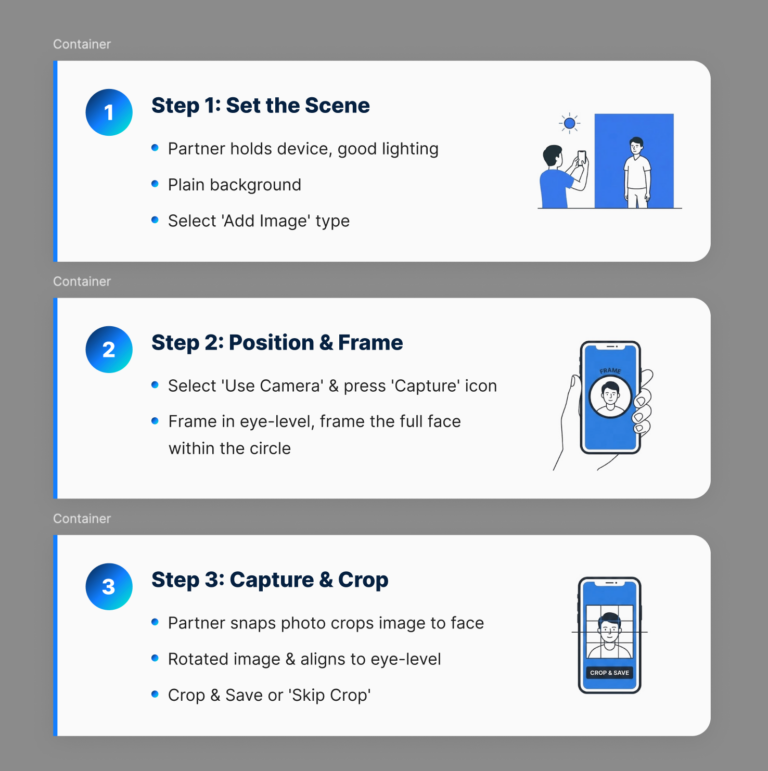
Unlike traditional systems that require medical equipment, Imaging studies, or complex procedures, FacialDx uses only a camera-enabled device. The capture process takes seconds. The analysis is immediate. The entire experience is frictionless and can be performed anywhere—from a command center to a forward operating base to a station house or training facility.
Importantly, FacialDx is not a medical device, does not diagnose medical conditions, and does not provide clinical treatment guidance. Instead, it offers a scalable early-indicator screening layer that helps leadership, wellness officers, and care teams identify when personnel may benefit from additional support, rest, evaluation, or resources. By enabling more frequent, unobtrusive check-ins, agencies can detect changes earlier, respond more strategically, and strengthen traditional care pathways.
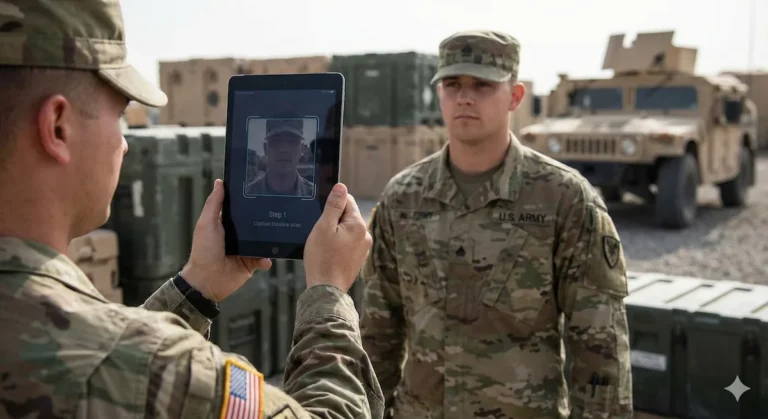
How FacialDx Works in Practice
The FacialDx process begins with a simple digital capture. A service member or first responder completes a short scan using a laptop, mobile tablet, handheld device, or workstation webcam. The system automatically analyzes the scan, measures thousands of variables, and interprets the information through proprietary AI models designed specifically for wellness-related indicators.
Results become available in a secure portal almost instantly. Supervisors or authorized personnel can review shifts in patterns over time, allowing for a continuous, longitudinal understanding of each individual’s wellness profile. This ability to compare present scans to prior baselines gives organizations an unprecedented view into subtle changes that may otherwise go unnoticed.
The technology is flexible enough to support use cases such as daily roll call screenings, pre-mission checks, post-incident evaluations, or periodic wellness assessments. As agencies scale usage, the system becomes even more valuable, revealing organizational-level trends that can inform staffing, operations, and training schedules.
Why It Matters for Military Units and First Responders
Early wellness awareness improves readiness. It lowers operational risk. It helps prevent escalation. It creates a healthier workforce that stays mission-capable longer. In environments where a momentary lapse in fatigue-induced judgment can mean the difference between life and death, having a non-invasive wellness indicator system is not just beneficial—it’s critical.
Military units benefit by identifying when someone may be struggling before deployment or after exposure to high-stress training or operational environments. Law enforcement agencies benefit by recognizing early indicators associated with burnout, fatigue, or cumulative stress. Fire departments gain clarity on personnel who may have been affected by traumatic calls or extreme physical strain. EMTs and emergency medical teams, who often experience relentless operational tempo, gain a way to track wellness shifts that could otherwise remain hidden.
The result is a safer, stronger, and more resilient force—supported by objective early insights rather than guesswork or delayed reporting.
Distinctions That Set FacialDx Apart
While many organizations are now adopting digital wellness tools, FacialDx differs in several important ways. It uses a broader set of facial data variables than traditional systems, giving it a deeper layer of early-pattern insight. It integrates easily with existing IT and wellness infrastructures. It supports both small-unit and enterprise-wide deployments. And it is one of the only wellness screening tools that can be run entirely from a camera-enabled device without requiring specialized hardware.
The technology is also backed by decades of clinical pattern research, a leadership team with deep experience in military and enterprise systems, and ongoing development that continues to expand the capabilities of the platform. FacialDx is designed not only as a solution for wellness analysis today but as an evolving system that will continue to support agencies for years to come.

Operational and Financial Impact on Military and First Responder Enterprises
When agencies gain early wellness visibility, they make better decisions. They reduce preventable absences. They lower the risk of performance-related incidents. They reduce long-term care costs associated with unaddressed wellness challenges. And they improve retention by supporting personnel more effectively.
Organizations that adopt systems like FacialDx often experience cost reductions by minimizing unnecessary clinical escalations, avoiding preventable injuries or errors, and strengthening the overall resilience of their workforce. Because the tool can be used at scale without expensive equipment, costs decline over time as the system becomes integrated into daily or weekly workflows.
In short, early insight reduces long-term expense.
Click here to start your free trial and experience the platform firsthand.
Contact FacialDX for More Information
FacialDx offers customized enterprise pricing packages for military units, contractors, law enforcement agencies, fire departments, EMS organizations, and other first responder groups. Because every organization has unique needs, pricing is determined on a case-by-case basis.
For enterprise pricing information, agencies may call or email our team directly.
Those who wish to explore the platform firsthand can begin immediately: Click here to sample the product and start a free trial.
Frequently Asked Questions (FAQ's) Military and First Responder Decision-Makers
1. What is FacialDx and how is it used for military and first responder wellness?
FacialDx is an AI-powered, non-invasive wellness screening platform that analyzes facial micro-expressions and symmetry to identify potential wellness indicators related to stress, fatigue, cognitive strain, and recovery readiness. For military personnel and first responders, FacialDx supports early awareness, monitoring, and triage decision-making without diagnosing medical conditions.
2. Is FacialDx approved for use with military, law enforcement, and first responders?
FacialDx is designed to support enterprise, government, and institutional environments and follows FDA-aligned wellness and risk-screening frameworks. It does not provide medical diagnoses and can be deployed as a supplemental wellness and readiness tool, making it suitable for military, fire, EMS, police, and federal response agencies.
3. How can FacialDx help identify stress and fatigue in first responders?
FacialDx evaluates facial markers associated with cognitive load, emotional strain, and fatigue patterns, helping organizations recognize early signs of burnout or overload. This enables agencies to take proactive wellness measures before performance, safety, or morale are negatively impacted.
4. Can FacialDx be used for PTSD and mental health screening?
FacialDx does not diagnose PTSD or mental health conditions. Instead, it provides non-invasive wellness indicators that may suggest elevated stress or emotional strain. These insights can help guide referrals, check-ins, or further clinical evaluation when appropriate.
5. How does FacialDx support readiness and operational performance?
By offering rapid, scalable wellness assessments, FacialDx helps commanders and supervisors monitor readiness trends, identify personnel who may need rest or support, and make data-informed deployment and staffing decisions—without disrupting operations.
6. Is FacialDx compliant with privacy and data security standards?
Yes. FacialDx is built with enterprise-grade security, supports HIPAA-aligned data handling, and follows strict data minimization and anonymization protocols. Agencies maintain control over access, storage, and reporting, ensuring compliance with public-sector privacy requirements.
7. How quickly can FacialDx assessments be completed?
FacialDx assessments typically take seconds to complete using standard camera technology. This allows for rapid, repeatable wellness screening in field environments, stations, bases, or clinical settings without specialized equipment.
8. Can FacialDx be used in emergency or field environments?
Yes. FacialDx is designed for mobile, remote, and high-pressure environments, making it well suited for emergency response units, military bases, disaster zones, and temporary field operations where traditional assessments may not be practical.
9. How does FacialDx help reduce long-term healthcare and disability costs?
By supporting earlier identification of wellness risks, FacialDx enables timely interventions that can reduce chronic stress-related claims, long-term disability, and avoidable healthcare utilization, delivering meaningful cost savings for government agencies and insurers.
10. Can FacialDx be used alongside existing behavioral health programs?
Absolutely. FacialDx integrates as a complementary first-line screening and monitoring tool, enhancing existing behavioral health, peer support, EAP, and resilience programs without replacing clinical care.
11. Does FacialDx require specialized training to use?
No. FacialDx is designed for ease of use, requiring minimal training for administrators or staff. Dashboards and reports are intuitive, enabling quick adoption across departments and ranks.
12. How is FacialDx different from traditional psychological assessments?
Unlike traditional assessments that rely on self-reporting or lengthy evaluations, FacialDx provides objective, passive wellness indicators. This reduces stigma, improves participation, and captures insights that may otherwise go unreported.
13. Can FacialDx support post-incident and critical event monitoring?
Yes. FacialDx can be used before and after critical incidents to help organizations track changes in wellness indicators, supporting informed decisions around recovery time, follow-up care, and return-to-duty readiness.
14. Is FacialDx scalable across large military or public safety organizations?
FacialDx is built for enterprise-level scalability, supporting thousands to millions of assessments across departments, regions, or agencies with centralized reporting and analytics.
15. How can military and first responder agencies get started with FacialDx?
Agencies can request a demo, pilot program, or enterprise consultation to explore how FacialDx fits their operational, wellness, and compliance needs. Flexible deployment models allow organizations to start small and scale quickly.
