
Telehealth has rapidly evolved from a convenience offering to a core operational channel for healthcare enterprises, government organizations, military health systems, and first responder support programs. While virtual care expands access and efficiency, it also introduces a challenge: maintaining engagement, awareness, and quality without in-person interaction.
AI facial analysis is emerging as a valuable tool for addressing this gap. When used responsibly, it supports telehealth engagement and wellness monitoring by providing non-diagnostic, AI-generated insights that help enterprises understand trends, optimize workflows, and enhance quality of care—without increasing regulatory risk.
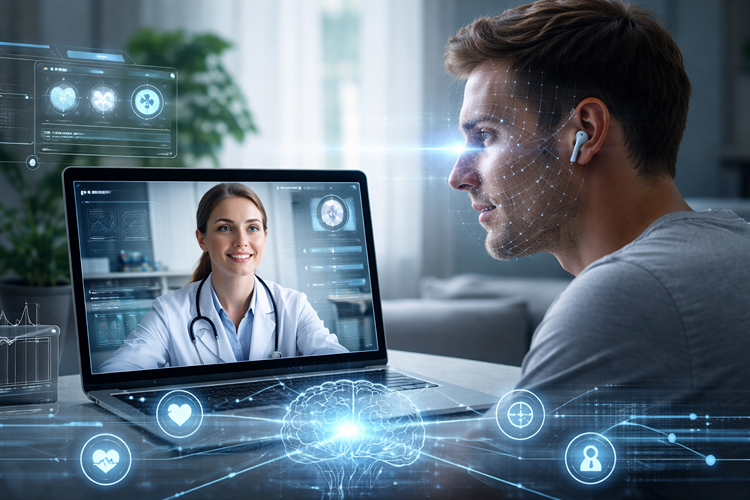
The Engagement Challenge in Telehealth at Scale
Telehealth interactions often lack the contextual signals present in face-to-face settings. Providers and organizations must rely heavily on verbal communication and self-reported information, which can be incomplete or inconsistent. Over time, this can impact engagement, satisfaction, and operational outcomes.
For healthcare enterprises, reduced engagement may translate into lower quality of care and higher downstream costs. For military and first responder organizations, it can affect readiness, resilience, and long-term workforce sustainability.
AI facial analysis helps bridge this gap by offering objective, observational signals derived from visual interactions already occurring in telehealth environments. Enterprises can try FacialDx free to explore how these insights integrate into existing virtual care workflows.
How AI Facial Analysis Enhances Telehealth Interactions
AI facial analysis evaluates observable facial signals—such as expression dynamics, attentiveness indicators, and stress-correlated patterns—across populations and over time. Importantly, it does not diagnose conditions or assess individual health states.
Instead, it provides aggregated insights that help enterprises:
- Monitor engagement trends across telehealth sessions
- Identify shifts that may indicate reduced participation or elevated stress
- Evaluate how different workflows, schedules, or environments impact virtual interaction quality
These insights help organizations improve the telehealth experience without interfering with clinician judgment or patient autonomy.
Improving Quality of Care Without Clinical Overreach
Quality of care in telehealth depends on more than clinical outcomes alone. Engagement, continuity, and trust all play a role. AI-generated wellness insights support these factors by enhancing situational awareness at the enterprise level.
Healthcare enterprises can use facial analysis trends to identify when engagement may be declining across departments or populations, allowing proactive adjustments to staffing, scheduling, or support resources. Military and first responder health programs benefit from better visibility into workforce wellness trends without introducing invasive monitoring or diagnostic claims.
Organizations evaluating these capabilities can try FacialDx free to assess how AI facial analysis supports quality improvement initiatives.
Cost Efficiency Through Smarter Insight
One of the most significant benefits of AI facial analysis in telehealth is cost efficiency. Traditional engagement monitoring methods—manual reviews, surveys, or follow-up outreach—are resource-intensive and often reactive.
AI-generated insights reduce costs by:
- Identifying issues earlier, before they escalate
- Reducing reliance on manual observation and reporting
- Supporting targeted interventions rather than broad, costly programs
For healthcare enterprises, this can mean lower operational expenses and more consistent care delivery. For military and first responder organizations, it supports readiness while reducing long-term human and financial strain.
These cost efficiencies arise not from replacing care, but from improving awareness and decision-making at scale.
Supporting Diverse Telehealth Use Cases
AI facial analysis supports a wide range of telehealth applications. In clinical environments, it enhances engagement monitoring across virtual visits. In behavioral health–adjacent and wellness programs, it supports longitudinal observation without diagnosis.
Military and first responder enterprises can integrate AI-generated wellness insights into virtual check-ins, resilience programs, and recovery initiatives. Correctional healthcare and institutional telehealth systems benefit from scalable monitoring that enhances awareness while maintaining ethical standards.
Across these use cases, the common value is consistent, objective insight that scales across large populations.
Governance, Privacy, and Responsible Use
Responsible deployment is essential in telehealth environments. AI facial analysis must operate within clear governance frameworks that prioritize transparency, consent, data security, and bias mitigation.
Outputs should remain aggregated and informational, avoiding individual-level labeling or clinical conclusions. Positioning the technology as a wellness screening and engagement analytics tool—not a medical device—helps organizations maintain regulatory alignment and stakeholder trust.
Platforms designed for enterprise use, such as FacialDx, are built with these considerations at their core.
A Strategic Advantage for Telehealth Enterprises
As telehealth continues to expand, enterprises that invest in better engagement and wellness insight gain a strategic advantage. AI facial analysis enables organizations to improve quality, reduce costs, and support human-centered care without adding friction or compliance risk.
For executives, the value lies in augmenting telehealth operations with scalable, AI-generated awareness. Enterprises interested in this capability can try FacialDx free to evaluate how facial analysis supports engagement, wellness monitoring, and quality improvement across their telehealth programs.
